In my role at Discovery Institute’s Center for Science & Culture, I interview scientists and scholars in the intelligent design research community and beyond. Here are some of my conversations and readings.

Experiments on the living unborn. Organ harvesting. Reckless biotech. Radical environmentalism. These are not horror stories playing at your local movie theater. They’re playing out in labs, hospitals, and institutes across America. On this episode of ID The Future, I speak with bioethicist Wesley J. Smith about frightening abuses of science being done in the name of progress. In this unnerving exchange, Smith discusses examples of biotechnology that are advancing faster than our ethical considerations, including synthetic human embryos, genetic engineering, and fetal farming. He unpacks recent attempts by environmental activists to give rights to non-living things like rivers and oceans. He explains the difference between animal rights and animal welfare, while exposing the animal rights campaign as an anti-human movement that inhibits human flourishing. Also discussed: the latest fronts in the gender ideology crusade and the pernicious push from evidence-based medicine to “science-based medicine,” a strategy that encourages censorship and totalitarian governance of the scientific enterprise. Watch the interview or listen to it!
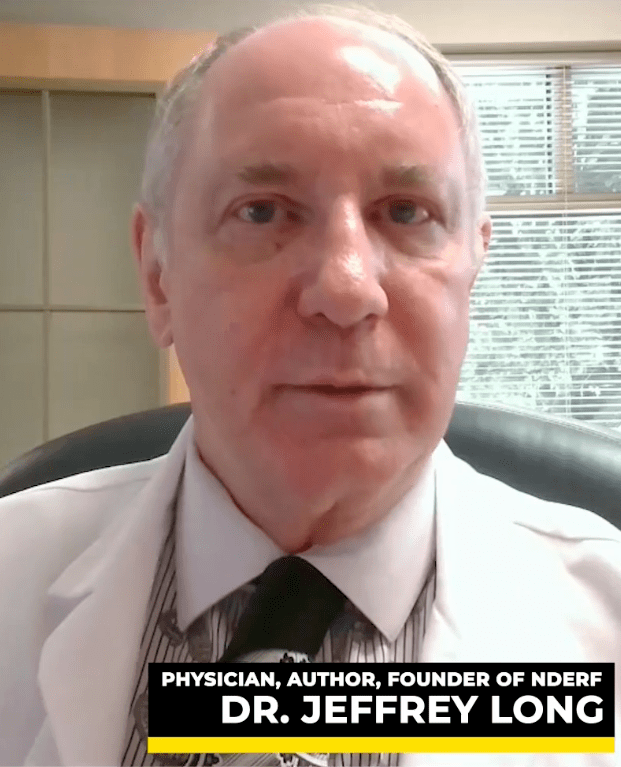
Is there life after death? Can science shed any light on this age-old question? And is the mind simply the workings of the brain, or is it something else? On this episode of ID The Future, I chat with Dr. Jeffrey Long, a radiation oncology physician and one of the scientists featured in the new Angel Studios feature film After Death. Dr. Long explains the hallmarks of a near-death experience and the common themes found in most near-death accounts. He also shares nine lines of evidence that support the scientific case for afterlife consciousness. And he explains why skepticism is a healthy part of science, while ideological rigidity can inhibit the scientific pursuit of truth. Watch the interview or listen to it!
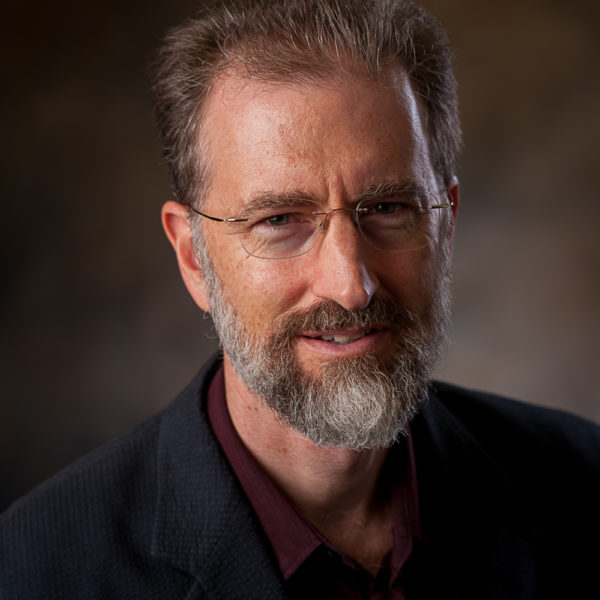
On this ID the Future, I sit down with historian and philosopher of science Michael Keas to discuss a recent article at Times Higher Education, “My Precious! How Academia’s Gollums Guard Their Research Fields.” The article looks at how scientific progress is being impeded by a culture in which scientists jealously guard their research instead of sharing it. Keas says the problem seems to have gotten worse in recent years but isn’t a new one. He illustrates with the story of Tycho Brahe and Johannes Kepler. Then he discusses some modern-day power plays involving evolutionists jealously guarding the Darwinian paradigm against those who would challenge it. Finally, Keas enumerates some of the virtues that can help further the progress of science, including generosity and a humble willingness to listen to criticism. Listen now.
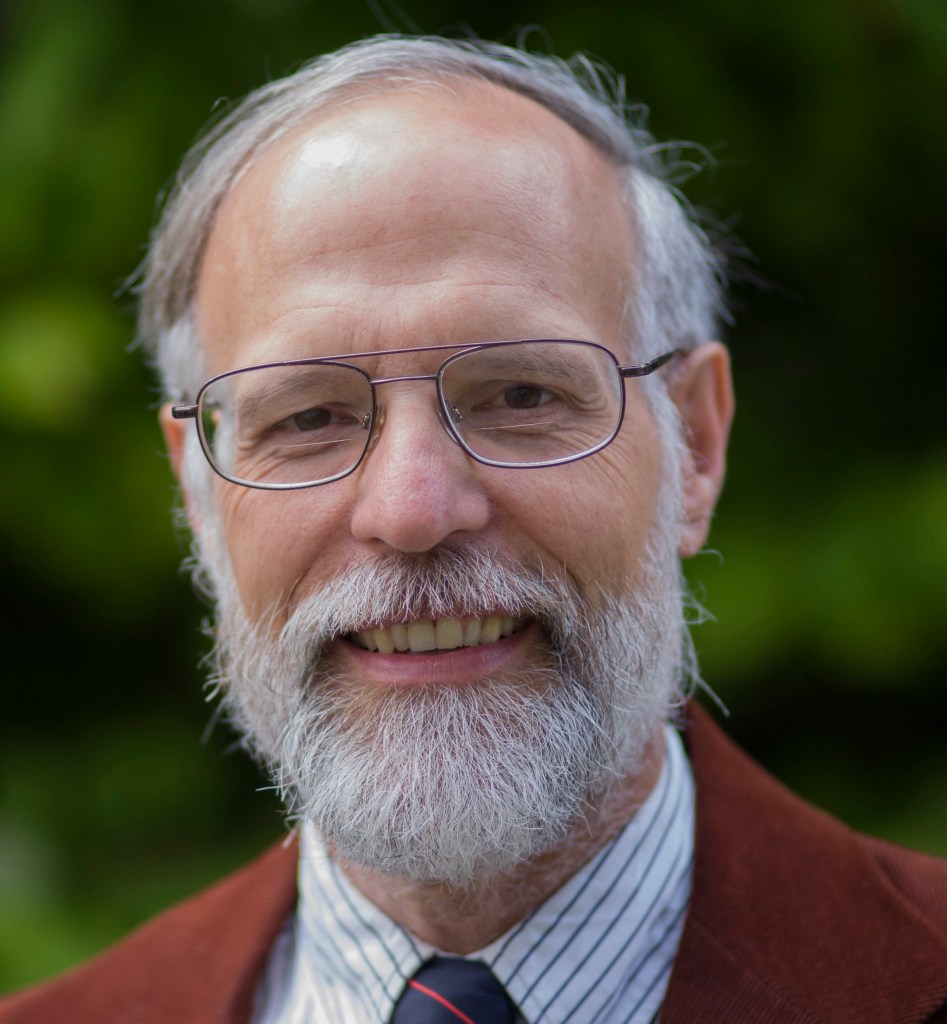
On this ID the Future, I read an excerpt from the Introduction and Chapter 1 of distinguished historian Richard Weikart‘s new book Darwinian Racism: How Darwinism Influenced Hitler, Nazism, and White Nationalism. Since Darwin was a peaceable Victorian English gentleman and naturalist, what possible connection could there be between him on the one hand and Hitler and contemporary white nationalism on the other? Weikart shows that the connection is in fact quite clear from the writings of Hitler, Darwin himself, and early Darwinists, and that the connection has continued to fuel scientific racism down to the present. Listen now.

On this episode of ID the Future, Zombie Science author and biologist Jonathan Wells and I explore the seductive but misleading appeal of “consensus science”: when someone makes a bandwagon appeal to support a scientific hypothesis rather than offering evidence and arguments — as in, “All serious scientists agree that X is the case.” Wells says history makes hash of the consensus-science appeal because the history of scientific progress is all about a consensus view being overthrown by a newer, more accurate view that for a time was a minority view. Wells also draws a distinction between evidence-based empirical science and ideologically driven science. Listen now.
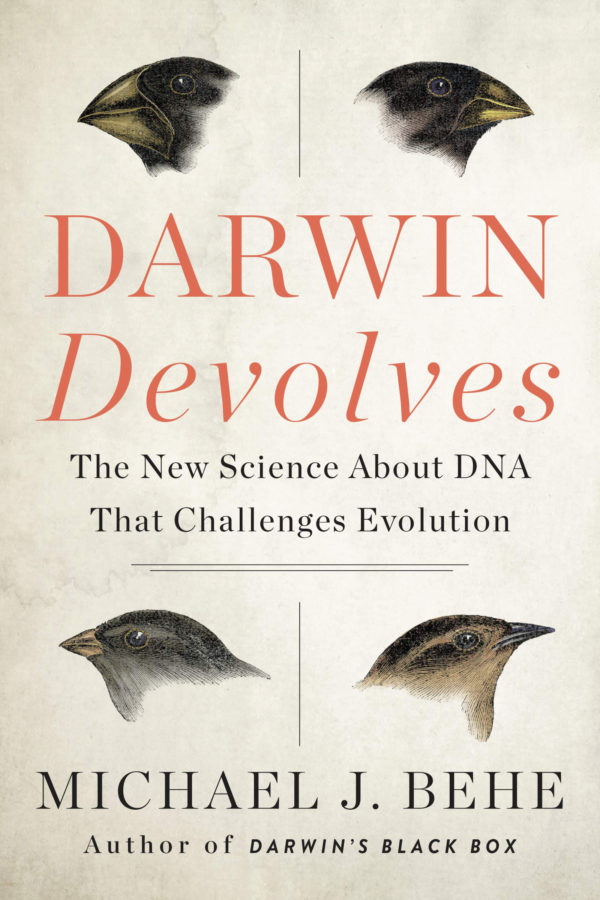
On this episode of ID The Future, I talk with biochemist Michael Behe, Professor of Biological Sciences at Lehigh University and author most recently of Darwin Devolves: The New Science About DNA That Challenges Evolution. Behe shares about his thinking on evolution as a post-doc, talks about the history of biology, and discusses why the turn of the millennium has been the perfect time to gain knowledge about the foundation of evolution and life’s history. This is Part 1 of a series. Listen now.
On this episode of ID the Future, I continue my discussion with biochemist Michael Behe about Part 2 of his new book Darwin Devolves: The New Science about DNA That Challenges Evolution. In this part of the book, Behe covers current theories for the origin of complex new interactive systems, from Neo-Darwinism to mathematical theories like neutral theory and the multiverse hypothesis. He also gives an update on Evo-Devo, or evolutionary developmental biology, and explains the difference between micro-evolution and macro-evolution. This is Part 2 of a series. Listen now. You can also listen to Part 5, where Behe explores how biology got enamored with mathematical theory built on “hopeful ignorance” regarding the nature of genes.
On this series for ID the Future, I chat over five episodes with science historian Michael Keas about Keas’ revealing new book Unbelievable: 7 Myths About the History and Future of Science and Religion. “Scientists do love a good story,” says Keas. “Turns out there are plenty of stories we shouldn’t believe, myths about science and Christianity supposedly at war with each other.” In Part 1, he gives a brief summary of each myth he tackles in the book. Listen to Part 1. The rest of the series is also available: Part 2: Dark Ages myth; Part 3: Myths surrounding Italian scientist Giordano Bruno, Part 4: Copernicus and Galileo myths; Part 5: Science fiction, C.S. Lewis, and a Large Cosmos.

On this series for ID the Future, I talk to Paul Nelson, a senior fellow of the Discovery Institute’s Center for Science & Culture and Adjunct Faculty in the Master of Arts Program in Science & Religion at Biola University. Nelson is a philosopher of biology who has been involved in the intelligent design debate internationally for three decades. In this three-part series, Nelson recounts his once-in-a-lifetime opportunity to visit the storied Galapagos Islands, where Charles Darwin spent five weeks in 1835. Nelson reveals where Darwin was right in his thinking and where he went wrong. Nelson also shares some fascinating stories of his time with the wildlife and how intelligent design relates to the grand history of biological life. Listen now: Part 1, Part 2, and Part 3.

On this series for ID the Future, paleontologist Günter Bechly and I discuss Bechly’s article “Ape-Man Waves Goodbye to Darwinian Gradualism.” Bechly touches on the oldest australopithecine fossil skull ever found, from 3.8 million years ago. The researchers behind the find are confident of its age but puzzled because the discovery undercuts one of the best examples of alleged gradual transition between two hominid species, and it also doesn’t fit well with common theories of phylogenetic relationship. The evidence poses a significant problem for the Darwinian mechanistic paradigm, but can be readily explained with an intelligent design approach. Interesting chat with a fascinating scientist! Listen now to Part 1. Listen to Part 2 detailing still more evidence challenging the Darwinian paradigm of gradualism in the fossil record.
To listen to more episodes of ID The Future covering the debate over evolution and the work of the intelligent design research community, visit idthefuture.com.
 Andrew McDiarmid